

Online casinos went from desktops to mobiles. The next step? Metaverse casinos. Explore how VR, AR, and blockchain are redefining gambling at meta-casinos.com
.
The Next Revolution in Online Casinos: From Mobile Screens to the Metaverse

A Casino Story Written in Pixels and Headsets
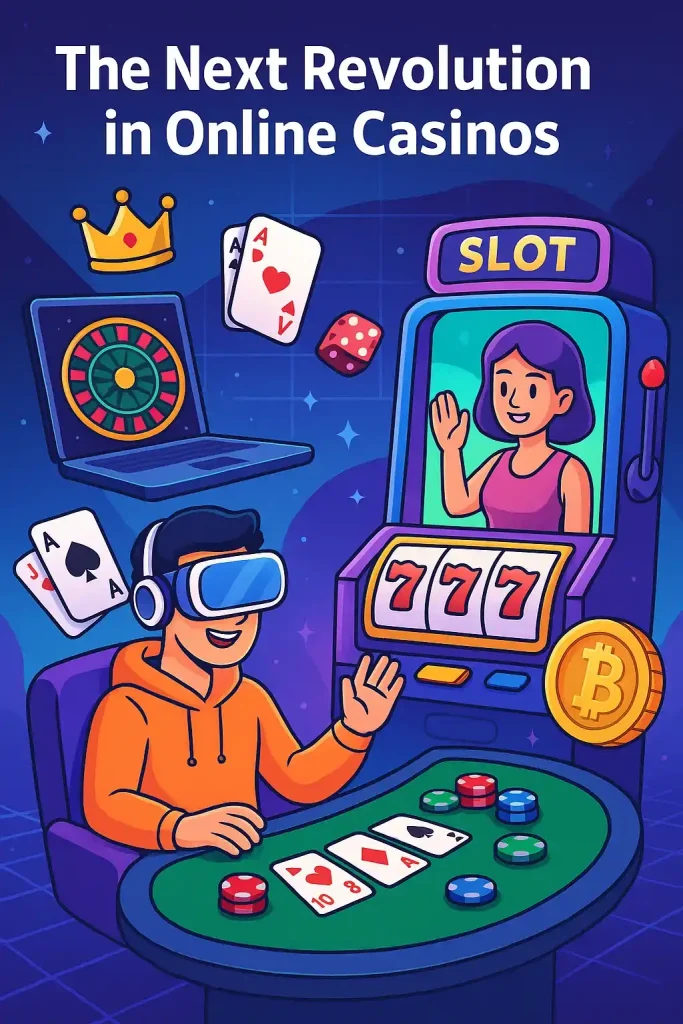
Online gambling has always been a chameleon. It started in the 1990s as a clunky webpage where a handful of slots whirred on dial-up internet. Fast-forward three decades and you’ve got billion-dollar companies building slick mobile platforms where blackjack fits in your pocket. But the next act isn’t about smartphones. It’s about strapping on a headset, walking into a neon lobby that doesn’t exist in the physical world, and placing bets with a digital hand. This is the Metaverse casino — a leap from convenience to full-on immersion.
And if mobile gaming democratized the casino floor, the Metaverse promises to reinvent it. Players won’t just tap spin anymore; they’ll stroll across virtual carpets, nod to fellow avatars, and take a seat at tables that feel as real as Vegas, minus the cigarette smoke.
How Mobile Gaming Trained Us for the Metaverse
Remember when gambling meant being tethered to a desktop? Those days vanished once smartphones became the true dealer. Mobile casinos weren’t just a technological upgrade — they rewired player habits. Apps nudged you with push notifications. Touchscreens made spins feel instant. Payment gateways shrank to a single thumbprint. Suddenly, slots and live dealer tables were accessible on a train ride, in a café, or under your bedsheets at 2 a.m.
This mobile revolution didn’t just expand the audience — it conditioned us for what’s coming. By teaching players to expect 24/7 access, fast payouts, and friendly interfaces, mobile casinos laid the groundwork for a future where gambling isn’t just portable but immersive. The Metaverse will simply take that expectation and crank the volume up to eleven.
What Online Casinos Look Like Today — And Why It’s Not Enough
Log in now to any major casino site and you’ll see a buffet: thousands of slots, sports betting lines stretching across continents, and live dealer studios broadcasting in 4K. The atmosphere is slick, the payouts faster, the promos endless. Players have never had more choice, and yet, a creeping sameness lurks.
Click through PartyCasino or any of its rivals, and the interface looks eerily familiar — clean menus, colorful banners, auto-translated lobbies. Sure, it’s smooth. But it’s also flat. The thrill of walking into a buzzing casino lobby — strangers laughing, chips clinking, the sound of shuffling cards — still belongs to brick-and-mortar. That’s the itch the Metaverse aims to scratch: taking the flat screen and blowing it up into a three-dimensional world where presence replaces pixels.
Inside the Metaverse Casino — Avatars, Headsets, and Crypto Chips
So what does a night out in the Metaverse look like? First, you strap on a VR headset. Suddenly, you’re not in your living room; you’re in a chandelier-lit lobby. Slot machines hum, avatars stroll past in tuxedos and dragon skins, and a blackjack table beckons. You sit down, your digital hands shuffle the cards, and across the table another player leans in — not a username, but an avatar with gestures and presence.
This isn’t just gimmickry. VR and AR fuse into social play, making gambling less about isolation and more about shared moments. Layer in blockchain, and every spin or shuffle is provably fair. Payments aren’t wire transfers that take days — they’re instant crypto transactions. Winnings live in your digital wallet, as transparent as the blockchain itself. In short: casinos stop being websites and start being worlds.
The Shadows Behind the Neon — Challenges Ahead
Let’s not kid ourselves. Every shiny promise has a crack. Regulators haven’t caught up; half the jurisdictions don’t even have words for “metaverse casino” in their legal codes. Hardware remains pricey — not everyone has $500–$1,000 to burn on a VR headset. And with more immersion comes higher risk: addiction may creep in when hours slip by inside a neon world that never closes.
Then there’s fraud. In a space built on avatars and crypto wallets, the threat of scams grows real. Casinos in the Metaverse will have to lock down security tighter than a Vegas vault if they want to earn trust. And players will need to navigate responsibly, because losing track of time in a digital poker room isn’t just a metaphor — it’s a real possibility.
Why the Metaverse Is Still Worth Betting On
Despite the hurdles, one truth remains: gambling has always chased spectacle. From smoky Vegas halls to polished apps, the industry thrives on giving players an edge of thrill, a hit of novelty. The Metaverse is that next adrenaline shot. It promises a return to glamour, not in bricks and mortar but in code and creativity.
For players, it means more than bigger bonuses or slicker mobile screens. It means presence — walking, talking, betting, winning inside a world that feels alive. For casinos, it’s a chance to reinvent themselves before sameness dulls the screen experience. And for sites like meta-casinos.com, it’s our job to guide you through that shift: to separate hype from reality, and to point out which Metaverse casinos are worth your chips when the time comes.


New Casinos

Spin Macho Casino offers a generous welcome bonus with free spins, a strong selection of online slots, fast payments and a secure, mobile-optimized gaming platform.

WinShark Casino offers one of the largest welcome bonuses on the market with free spins, frequent promotions, popular slots and a secure mobile-optimized platform.

TurboWins Casino offers speed, style and rewards – enjoy 200% up to €5000 + 10% cashback, thousands of games and fast payments.
Neon Casino Worlds – Discover Trusted Metaverse Platforms

TurboWins Casino offers speed, style and rewards – enjoy 200% up to €5000 + 10% cashback, thousands of games and fast payments.

WinShark Casino offers one of the largest welcome bonuses on the market with free spins, frequent promotions, popular slots and a secure mobile-optimized platform.

Spin Macho Casino offers a generous welcome bonus with free spins, a strong selection of online slots, fast payments and a secure, mobile-optimized gaming platform.




Meta-Casinos.com is intended only for users over 18 years of age. Gambling can be addictive — please play responsibly.
More information available at BeGambleAware.org
© 2026 Meta-Casinos.com — All rights reserved.