

From Las Vegas to VR headsets, casinos keep reinventing themselves. Metaverse casinos promise immersive play, avatars, and blockchain bets — but are they the real future?
Are Metaverse Casinos the Future of Online Gambling?

The House Always Evolves — From Vegas Floors to Virtual Worlds
For decades, the casino floor had a postcode: Vegas, Atlantic City, Monte Carlo. If you wanted flashing lights and roulette wheels, you bought a ticket and showed up in person. Then came the internet, and the house stopped being a place — it became a website. Suddenly, the casino lived in your living room.
Fast-forward to today and we’re staring at another mutation: the Metaverse casino. This isn’t just online gambling with slicker graphics. It’s a reshaping of how we play, bet, and socialize. With headsets, avatars, and blockchain wallets, gamblers are walking into digital halls where reality bends, avatars mingle, and poker games feel as close to flesh and blood as code allows.
At meta-casinos.com, we’re watching closely. Because whether this is hype or destiny, it’s clear: the casino industry has no off-switch when it comes to reinvention.
How the Internet Made Every Couch a Casino Chair
When online casinos first appeared in the 1990s, they felt like bootleg Vegas — pixelated slots, clunky card games, and trust issues everywhere. But gamblers didn’t care. Convenience trumped glamour. Why fly to Nevada when you could lose your paycheck from your kitchen table?
Technology caught up. Mobile apps made play smoother. Live dealer games streamed in HD turned loneliness into interaction. Suddenly, blackjack wasn’t just a button — it was a real dealer in a real studio shuffling real cards, right onto your phone screen.
That shift did more than change habits. It conditioned players to expect frictionless access. If the internet cracked the door open, mobile blew it wide. The Metaverse is simply the next step — a casino without doors at all.
Metaverse Casinos — Where Avatars Pull Up a Chair
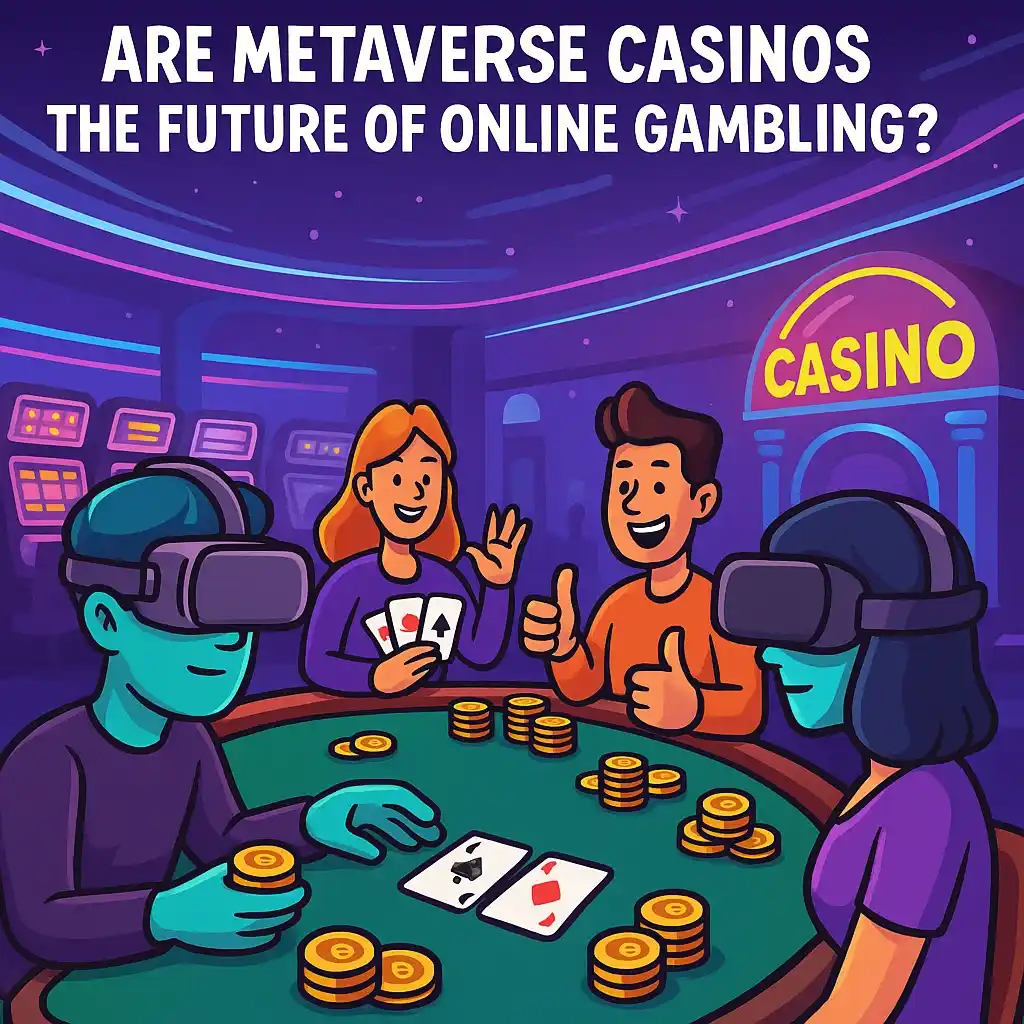
So what is a Metaverse casino, really? Imagine stepping onto a casino floor where you’re not you but an avatar you’ve designed. You walk past glowing slots, sit down at a poker table, and chat with other avatars who might be gamblers in Tokyo, Madrid, or New York. The room doesn’t exist physically — but it feels like it does.
These casinos blend VR, AR, and blockchain. VR headsets immerse you in 3D lobbies. AR sprinkles digital elements into your real room. Blockchain keeps bets transparent and games provably fair. Crypto coins replace chips, and wallets replace cashiers.
For players, the thrill isn’t just the chance to win — it’s the feeling of presence. The casino isn’t on your screen; you’re inside it. It’s gambling as theater, as spectacle, as community.
The Catch — Headsets, Hacks, and Hesitations
Every bright promise comes with shadows. VR headsets are still pricey toys. Gamblers used to tapping a mobile app may not rush to strap one on. For many, the comfort of traditional online play beats the hassle of new gear.
Then there’s security. While blockchain secures transactions, the Metaverse widens the attack surface. A casino juggling VR servers, wallets, avatars, and smart contracts has more doors for hackers to pick. And regulators? They’re lagging. Many countries barely know how to license crypto casinos, let alone ones where avatars gamble at DJ-hosted roulette parties.
It raises the question: is this the next revolution, or the gambling world’s version of driverless cars — shiny, hyped, but stuck in beta?
Why the Bet Still Looks Worth Placing
Here’s the truth: gamblers chase novelty. They always have. The neon of Vegas, the speed of mobile, the glamour of live dealer streams — each was once dismissed as a fad. Now they’re the norm.
Metaverse casinos may not yet have swallowed the industry whole, but the ingredients are here: immersion, crypto, community. As costs fall and adoption rises, the line between online gambling and social gaming will blur until you can’t tell the difference.
For players, that means more than bigger bonuses or flashier graphics. It means stepping into a world where gambling is an experience, not just a transaction. For casinos, it’s survival: innovate or fade.
And at meta-casinos.com, we’ll be here calling it as we see it — where the house always evolves, and gamblers follow.

New Casinos

Spin Macho Casino offers a generous welcome bonus with free spins, a strong selection of online slots, fast payments and a secure, mobile-optimized gaming platform.

WinShark Casino offers one of the largest welcome bonuses on the market with free spins, frequent promotions, popular slots and a secure mobile-optimized platform.

TurboWins Casino offers speed, style and rewards – enjoy 200% up to €5000 + 10% cashback, thousands of games and fast payments.
Neon Casino Worlds – Discover Trusted Metaverse Platforms

TurboWins Casino offers speed, style and rewards – enjoy 200% up to €5000 + 10% cashback, thousands of games and fast payments.

WinShark Casino offers one of the largest welcome bonuses on the market with free spins, frequent promotions, popular slots and a secure mobile-optimized platform.

Spin Macho Casino offers a generous welcome bonus with free spins, a strong selection of online slots, fast payments and a secure, mobile-optimized gaming platform.




Meta-Casinos.com is intended only for users over 18 years of age. Gambling can be addictive — please play responsibly.
More information available at BeGambleAware.org
© 2026 Meta-Casinos.com — All rights reserved.